Showing posts with label MFA. Show all posts

Tuesday, April 4, 2023

UCI Sound Design class of 2026

After a thorough search and interviewing lots of exciting candidates, Mike and I are happy to introduce our incoming class of sound designers!  Here they are!

Eric Backus (he/him) is a composer and sound designer, joining UC Irvine’s sound design cohort from Chicago. Originally from Phoenix, Arizona, Eric received a B.A. in Theatre from Arizona State University. His original music and sound designs for theatre have been heard around the country, Off-Broadway, and in many Chicago theatres including The Goodman, Chicago Shakespeare Theater, Steppenwolf, Writers, and Northlight. In addition to theatre, Eric composes and sound designs for podcasts and film. He is beyond thrilled to be back in the West Coast sunshine, and to join UCI’s MFA Class of 2026! www.ericbackus.com


Andrew Yoder is a sound designer/producer/DJ from Boise, Idaho. His start in sound began with his passion for music and DJ culture inspiring him to blend aspects from all across the musical spectrum and applying them to the theatrical world. Starting his sound design journey early in his undergraduate career with Sam Shepard's True West. Since then he has gone on to receive 3 awards from the Kennedy Center American College Theatre Festival('19, '20, '21) for excellence in sound design for his work on A Kind of Alaska, Drowning Ophelia, and The Moors. He was also a nominee for the Don Childs' Collaboration Award in 2019. Outside of sound design, he enjoys disc golfing, yoga, and DJ-ing.
 

Welcome, Andrew and Eric!  We can't wait to start working with you in the fall!

Tuesday, January 10, 2023

UCI Sound Design is Recruiting MFA students!

It's January, which means that UCI Sound Design is officially recruiting for our MFA class of 2026.  Have you been thinking about grad school for sound design, we want to hear from you!

If you think that a Sound Design MFA may be the next step in your career and/or creative life, we think you should give UCI a look.  We're proud of our program and the students who study with us, and we want to talk to you about what we can offer your education and whether we might be a good fit!

If you're interested in learning about UCI Sound Design, here's what you should do:
  1. email Prof. Vinnie Olivieri at olivieri@uci.edu to introduce yourself and set up a time to chat
  2. head over to our program website to read about the program.
  3. bookmark the application page for all UCI graduate admissions.
Drop us a line!  We'd love to chat with you!

And, for the algorithm, here are some photos of UCI MFAs doing awesome things in our program.


Students at Meow Wolf's Omega Mart on a field trip for their Themed Entertainment Class.
Kissing the duck brings good luck.


Walking from building to building on a tour of the Meyer Sound Lab facilities.


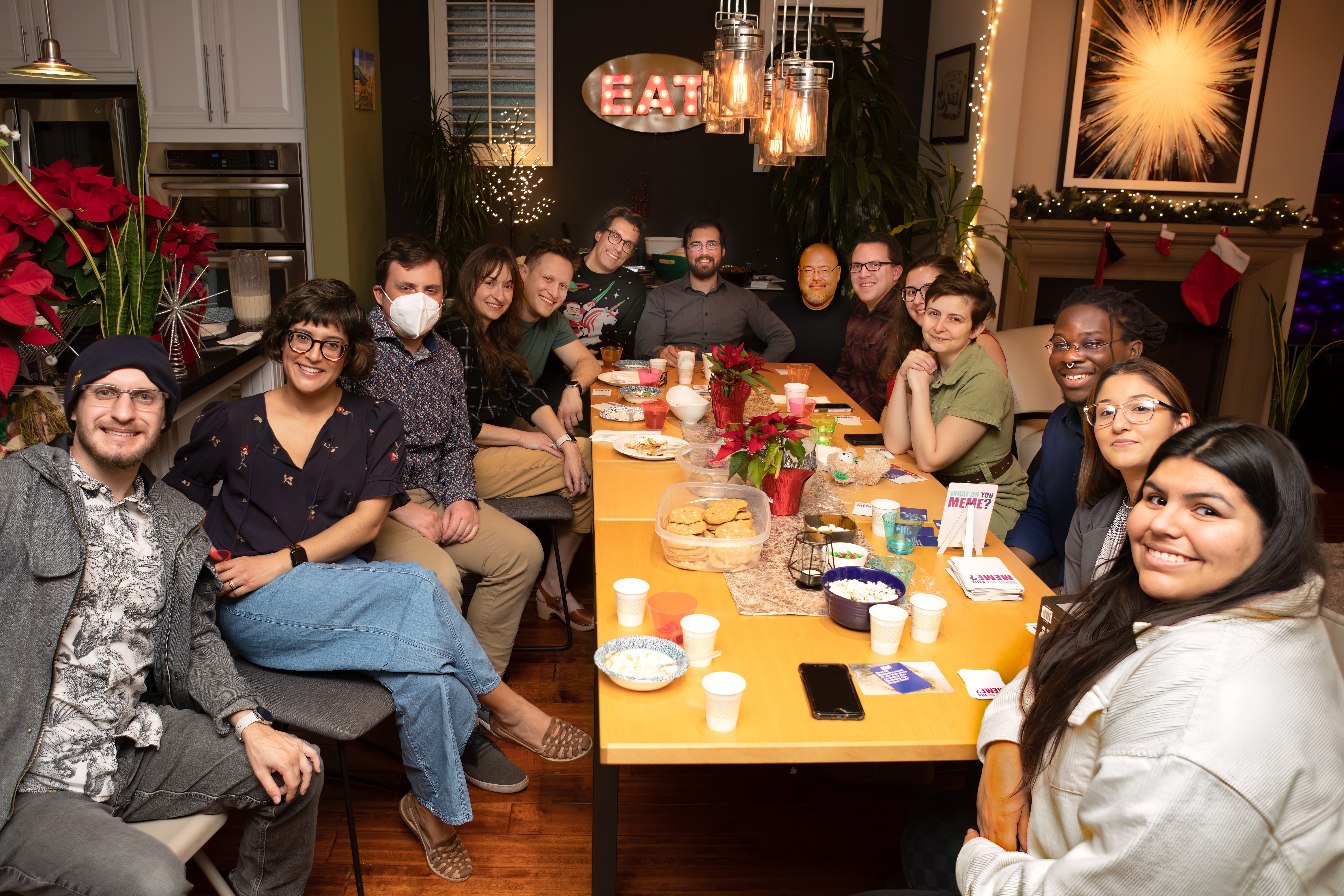
Students, alumni, faculty, staff, and a significant other at our annual Holiday Party!

Was the Escape Room trip part of Themed Entertainment research or team-building?  Why not both?

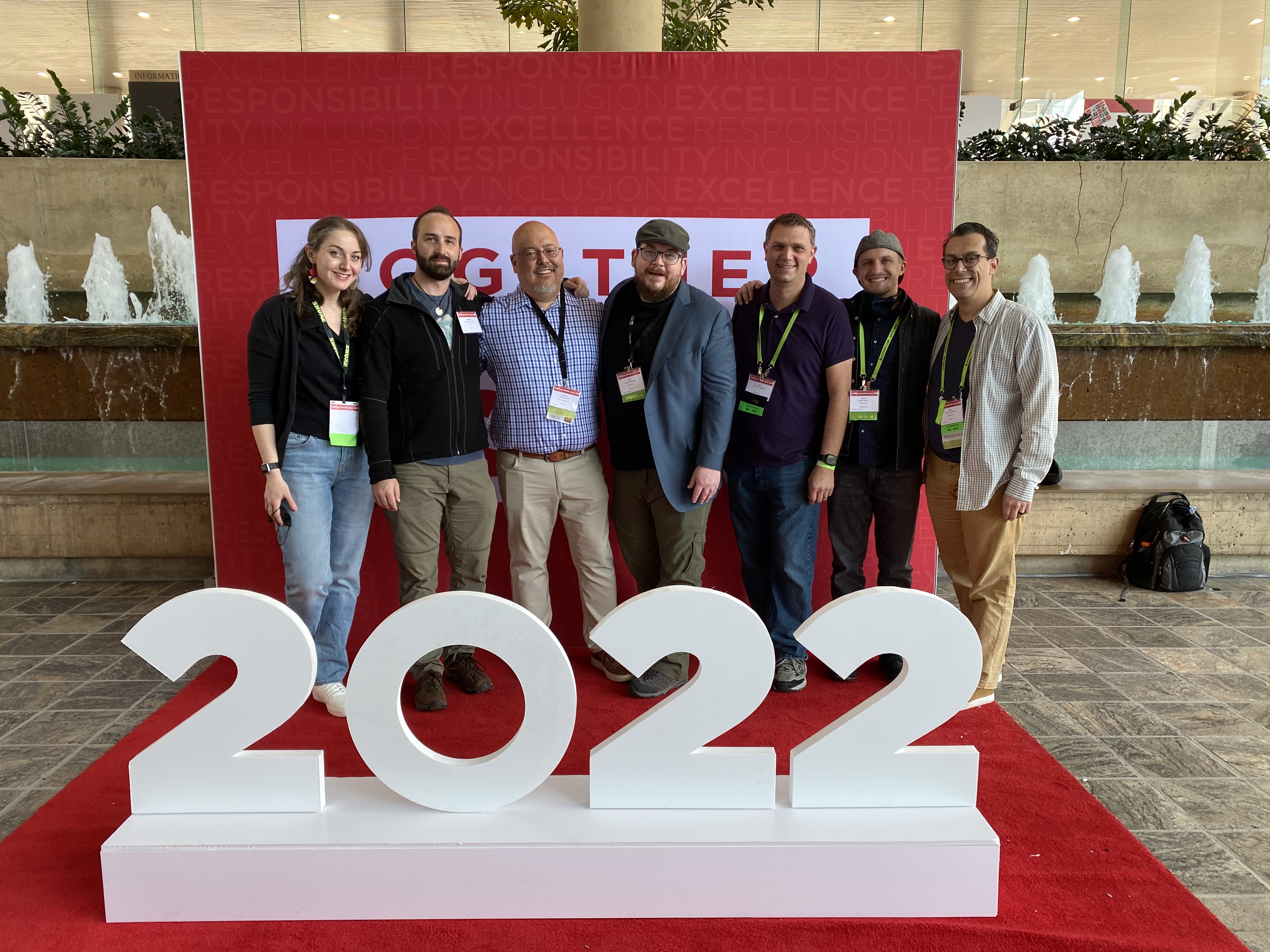
Students, faculty, staff, and alumni at USITT's 2022 conference.

A student mixes on L-ISA at L'Acoustics' North American HQ.


Tuesday, April 12, 2022

UCI Sound Design: class of 2025

Recruiting students into the MFA Sound Design program is always tough for us.  We can only take two students each year, and there are always terrific students out there that we have to decline. This year was particularly difficult - the number of exceptional candidates was four times higher than it usually is, which made our decision much more difficult.

That said, Mike and I, along with the rest of the program are delighted to welcome our incoming students for this fall: Melanie Lopez and Jeremiah Turner.  Melanie and Jeremiah stood out to us with exceptional combinations of talent, creativity, curiosity, professionalism, and experience.  We're looking forward to working with them for the next three years!

I asked each of them to submit a short bio, so here they are, in their own words:


Thursday, January 20, 2022

Audio Theater - our return to the stage!

I was going to start this blog post by talking about the impacts on UCI Sound by COVID-19, but there’s nothing new under the sun there.  It stinks, and we all know it.  So let’s skip ahead.


In November 2021, UCI Sound was an integral part of the first live in-person mainstage performance at UCI since the pandemic began.  AUDIO THEATER was a bill of six student-written plays, performed live and recorded for eventual streaming (stay tuned!).  The plays were performed as part of a single bill, and each performance was recorded.  At the end of the run, the designers and directors chose the strongest performance, and the sound design team then prepared the recordings for streaming.


photo by Paul Kennedy


For UCI Sound, this was a complex task.  Six plays, each with their own sonic landscape, each with their own cast.  Six playwrights, each with their own text, some of which were in more flux than others.  Six directors, each with their own vision, who were serving both the audience live in the theater and the eventual streaming audience.  Five designers (four sound, one lighting – no scenic, costumes, or projections), who needed to serve their plays and support each other.  A phalanx of stage managers, who kept rehearsals efficient, safe, and effective. Dozens of actors, plenty of staff and support personnel.   One sound system, with one production assistant and one A1 (our two first-year MFAs).  


For pandemic reasons, we mounted these productions with actors spaced out, at microphones, in static positions.  They could look at each other and communicate over distance, but they couldn’t leave their microphone position. This gave the event more of a broadcast feeling rather than a theatrical feeling.  


photo by Paul Kennedy


Each console input and output was recorded for maximum flexibility when mixing/producing after the run.  Once the designers had finished mixing their pieces, they passed their final mixes off to one student who served as the mastering engineer for the whole bill.


Each of the designers has written a bit about their play and their approach to the sound design for it.  So, here they are in their own words (edited slightly):


DO YOU TRUST ME? – JJ Margolis, Sound Designer


Do You Trust Me, written by Summer Savonna Session and directed by Cybelle Kaehler, is a nostalgic flashback story set in the late 90’s. After meeting in middle school, Leon and his best friend Ty develope a tradition of exploring haunted buildings in their town. In high school, they take their girlfriends to a warehouse prepared with alien-themed props, traps, and sound effects to scare Jess, and in that warehouse they encounter… something they do not expect.

The task of sound for this story was to help support the world and ground the vocal performance in a believable, but not wholly realistic space. Through the combination of recorded audio effects and synthesized sounds, the ‘scenery’ of the play is established. One of the most interesting challenges of this is the balancing act of building a supernatural suspense without confirming in one way or another whether there is truly anything unnatural present.

As the core of the play, the vocals stood central at all times. I used different reverb effects to bring the characters into the spaces that they flashed back to. In addition, I needed to separate Leon into both a narrator and a character. I accomplished this by isolating the lines that he spoke as narrator, keeping them clean of any aforementioned reverb and adding a tube-modeled compressor to support the warmth of those lines. Finally, I layered very subtle processing onto some of the characters as the story progressed… but that would be spoilers.


LIE IN STATE – Aerik Harbert, Sound Designer


As we round out a year since the January 6th insurrection in the Capitol, Lie In State, written by Meliza Gutierrez and directed by Angela Cruz, serves as a testimonial to the events of that day. Not of reality, but of possibility; it’s impossible to know the exact complexities of what it meant to be a police officer, congressperson, or innocent bystander on location that day, but Lie In State gives us a taste of their fear, hope, and humanity. When confronting the possibility of death first hand, who knows what may come to mind?


Many of us have seen video taken on location, but there is an inherent safety in a recording because we know that we were not personally the targets of that mob. I needed to keep the feeling of danger up so that our characters never felt truly at ease, while still leaving space for them to speak their piece. There are discrete events supported by sound as protesters break into the building which highlight specific moments of danger, but the true danger in this setting is the human element, so I chose to use a persistent bed of protesters which always lived in the background.


This background detail ebbs and flows dynamically to carve space for important moments of dialogue for the actors, and it only peaks at specific moments where the increase in danger was necessary to keep stakes up as we moved from dramatic beat to dramatic beat. There are some non-diegetic elements, but overall, the sound lived within the world of the play so that the characters and audience are engaged in the same level of energy.


WHEN WILL MI HIJA VISIT ME? – Meghan Roche, Sound Designer


When Will Mi Hija Visit Me? written by Cindy El & directed by Leah Jackson, focuses in on a mother telling her friend the story of her daughter’s disappearance from her life. Maria is our main (and only speaking) character, and we wanted to keep her “real world” and “memory world” as separate as possible so there would be moments where the audience felt firmly in the world of Maria’s literally telling this story to her psychological space as she recounted it; that became my main focus as I designed the piece.


To achieve the “real world” moments, I used room tone and other low sound effects, like distant outdoor ambiance and a ticking clock, to place us in her kitchen. We also had live foley accompanying the very first and very last moments of the piece as Maria makes her coffee and fiddles with her spoon and mug. This took a fair amount of trial and error; we made good use of UCI’s extensive prop shop to find the right materials to make the sounds we wanted, and I auditioned a lot of different options for room tone—the ones I’d been working with initially wound up feeling much more out of place in the physical space than they did when I was making mock-ups and pulling SFX on my computer at home! But eventually we found a good balance, and the room tones in combination with EQ and reverb processing felt quite convincing in the Claire Trevor Theater.


The “memory world” also made use of EQ and reverb, but were meant to feel significantly less grounded than the kitchen FX did, and all of the SFX I used in the more involved flashback sequences also had a fair amount of that same reverb. There was also subtle tonal underscoring in a number of places to help support the most emotional moments.


The in-person presentation of this piece was a little different than what you will hear in the recording, as it also involved two non-speaking actors onstage doing movement work as Maria’s husband and daughter, silently acting out the story as she told it in a stylized and very physical manner. Because we do not get that in the recording, a few spots were trimmed down and adjusted to make the pauses in our actor’s speech make more sense.


The Happiest Bunch – Costa Daros, Sound Designer


The Happiest Bunch, written by Mary Hill and directed by Mary Hill and Arizsia Staton, was a slice-of-life comedy break in our night of dramas. I wanted to embrace the endearing sitcom style, so the design was mostly realistic with some exaggerated moments to heighten the comedy like Martha's murmuring and our moment within their phone conversation. Overall, the sound helped to bring the piece to life and give the characters something to react to during their performance.


Nearer By Far – Meghan Roche, Sound Designer


Nearer By Far, written by Erica Clare Bogan and directed by Dylan Seeley, was another one-actor play. It takes place in a submersible unit—essentially a very tiny submarine designed to go deep in the ocean—and is told in the form of the taped journal entries recorded by one-half of an underwater duo who were there doing undisclosed scientific research. Early in the piece, however, we learn that the other half of the team was killed, and our main character has to figure out what went wrong, and how to survive on her own.


From the beginning of our discussions about this piece, we knew that we wanted to lean into the “found tape” aspect of it, using vocal processing to really compress & affect our actor’s vocals in a way that emulated the feeling of listening to an old recording & adding in sound effects that were very specific to starting and stopping a tape recording. This came less from a desire for realism, but instead as a way to heighten drama and show the passage of time between journal entries. I also made heavy use of various drone styles—more easily heard in-person, with our beefy subwoofers and lovely Meyer speakers, than on the average computer speakers, but still present nonetheless—for the drama piece of things. They shifted subtly from entry to entry, but all throughout there was also a separate drone that faded up very slowly and imperceptibly as it went, which made the dropout of almost all of our atmospheric sounds at a power outage moment late in the piece all the more emotionally affecting.


The Informant – Costa Daros, Sound Designer


The Informant, written by Grace McCarney and directed by Lucas Nelson, was the retelling of a woman's involvement in WWII to her granddaughter. As she narrates the story, the characters she talks about come to life and take over the dialogue for her. I designed the sound in order to help divide these worlds of the story being narrated by her future-self from the story taking place in real time. This gave us the opportunity to incorporate live foley into the design which helped the characters around the woman create the world she talked about.


Right now, we’re putting the finishing touches on the mixes and mastering them.   Once the elements are in the can, we’ll be streaming them over the nets!  I’ll post again then.  

Monday, March 8, 2021

UCI Sound MFA, class of 2024

Every year when we interview potential MFA students for our Sound Design program, Mike and I always lament how hard it is to choose just two students from a qualified pool.  There are generally three or four students that are strong candidates, and it can be an excruciating decision to select which students to invite to join us for three years.  Part of selecting two students means necessarily saying 'no' to many more, including the few top-ranked alternates.  

This year was much harder, due mostly to COVID-19.  Because our industry is basically at a standstill, many folks are deciding that now is a good time to get their degree.  The number of qualified interested students shot up 500% this year. Instead of a pool of three or four top candidates, we had nine.  And, while in a normal year, we'd invite those three or four applicants to campus to sit in on classes, meet with faculty/staff/students, tour the facilities, and generally get to know us, this year UCI's campus is virtually shut down to outsiders.  So, we pivoted, scheduling Zoom sessions so that all nine top applicants could sit in on classes, meet with faculty, staff, students, get a portfolio review, etc.  It was a bit of a logistical nightmare and something I hope we don't have to repeat next year, but it gave us a chance to meet so many students that we'd never have gotten the chance to meet before. 

It also made our decisions harder, because while the number of excellent applicants increased, the number of people we could accept didn't.  We still had to choose two.  So while we're thrilled with the two women who are joining us this fall, we also want to publicly say that we wish we could have taken more of you!  Those applicants who are reading this - we wish you all the best and look forward to seeing your careers grow!

This year, Mike and I are thrilled to welcome to the UCI Sound Design MFA program two extraordinary designers.  I've asked them to write their own bios.  Here they are:

Tuesday, December 1, 2020

Teaching D-Mitri Remotely

Every fall, in our Digital Audio Systems class, I teach our first-year sound designers a two-week intensive overview on the Meyer Sound D-Mitri system.  D-Mitri is a powerful tool for live sound that combines the functions of a digital mixing console, a sound content playback device, a multi-channel sound spatialization tool, a room acoustics enhancement tool, and a show control hub all into one package.  D-Mitri systems are found in large scale sound installations around the world, from theme parks to Broadway to more.  The ubiquity and capabilities of D-Mitri are so large (as is the learning curve, frankly), that we typically have a number of second- and third-year students join us for the D-Mitri training to refresh their skills.

UCI has a small D-Mitri system, and we use it both as a teaching tool and in production.  When we teach with it, we roll the rack into the Meyer Sound Design Studio and patch eight D-Mitri outputs directly into our eight-channel loudspeaker system so that we can learn and work with it while experiencing its spatialization capabilities in real time.  D-Mitri programming happens through software called CueStation, which functions in a client-server capacity.  Multiple users can be logged into D-Mitri at the same time, each working on a different aspect of the programming.  Our D-Mitri classes typically involve everyone in the studio, sitting at their laptops, all wired into D-Mitri with a nest of ethernet cables.

The Meyer Sound Design Studio, in the before-times.


Of course, we can't do that this year.  We could have delayed the training module until we were able to meet safely, but I don't know when that will be, and I'm honestly tired of delaying things because of the freaking pandemic.  I didn't want to let the perfect be the enemy of the good, to paraphrase Voltaire.

So, in a pandemic, how do you teach a class that requires both client-server access AND the ability to perceive spatialized sound?  In order to solve this, I needed to think through a number of different challenges.  Here they are, how I thought through them, and how I eventually solved them.


Physical Locations

We knew that the D-Mitri rack would need to live in the Meyer Sound Design Studio.  The studio is currently cleared to be occupied by three people, but I was uncomfortable coming to campus for in-person class (I'm teaching all of my classes remotely this term).  Plus, I know how important the refresher is to our more senior students, and I didn't want to cut them out of the experience.  So, each student would be remote, logging in with their computers (with wired connections, preferably).  I came into the studio to teach the classes so that I could take care of any issues that came up while teaching that I couldn't deal with remotely.

Even though I'd be teaching from the studio, I expected that I'd need to be able to remote into the host computer in order to tweak details from home. Early in the quarter, while testing, I found that if I were on campus, I could screenshare with the host computer (an iMac that we call Chalkboard), but when I returned home, I couldn't screenshare with Chalkboard at all.  After consulting with our IT department, we determined that we needed a more robust screensharing tool.  We installed TeamViewer on Chalkboard so that I could control the host computer, restart failed connections, etc.  TeamViewer mostly worked like a champ, though there were a few times where I couldn't log on to Chalkboard at all. 


Connecting CueStation to D-Mitri

The easiest way to share a CueStation screen with the students was to just share my laptop's desktop via Zoom, but if I did that, they'd just be watching me click things, which is hardly useful when teaching a tool.  The students needed to be able to control CueStation on their own in order to get their (virtual) hands on the (virtual) machine.  I asked Richard Bugg with D-Mitri about how we might address this issue, and he noted that D-Mitri systems can be controlled from around the globe using a proxy server. The folks at D-Mitri use this feature to troubleshoot systems without having to fly halfway around the world, but it was just as useful for my needs.  Richard walked me through the steps to set it up and spent some time doing some testing with me. The proxy server required Chalkboard to be running CueStation, but as long as it was running CueStation and the proxy server was active, I could have up to eight clients logged in at the same time.  Sometimes it took a while to get all students onto the proxy server at the same time. The folks at Meyer use the proxy server to do maintenance on machines that are difficult to get to, not to teach D-Mitri to a class, so they don't typically have the user count that we did. 


Monitoring

So, we've figured out where everyone would be, and we figured out how everyone can control D-Mitri using a proxy server.  How can we send spatialized sound to the students so that they can all monitor the D-Mitri environment well?

My first thought was to build a SpaceMap (D-Mitri's spatialization tool) replica of the Meyer Sound Design Studio's loudspeaker configuration, take the eight outputs of D-Mitri into a DAW, place them into a 5.1 session, stream the six-channel output over the net, and then have students monitor with 5.1 headphones.  But, we ran into a number of challenges with this idea.  First, I couldn't find a reliable six-channel sample-accurate streaming tool.  We've been using AudioMovers, which does a great job with two-channel signals, but in testing, multiple two-channel instances did not sync to each other (there are rumors of a >2-channel upgrade, but I haven't tested it yet).  Also, six channels of audio is three times the bandwidth of two channels, which could impair networks in dorms and homes.  Finally, I was hoping to avoid having to seek out funds to buy enough 5.1 headphones to outfit the class.  So, back to the drawing board.

SpaceMap of the Meyer Sound Design Studio
A spacemap of the MSDS studio.


I solved my problem in the next iteration.  I still took the eight channels from D-Mitri in to my DAW, but instead of mixing to 5.1, I mixed to binaural.  I initially used Binauralizer by Noisemakers to render each D-Mitri input relative to the loudspeaker's position in the room, though I shifted to the dearVR Micro plug-in due to better low frequency management.  The DAW mixed all eight inputs together, and then I used AudioMovers to send a two-channel stream out to the students.  I cut the audio bandwidth by two-thirds and removed the need for 5.1 headphones!  

ProTools Session Set-Up
ProTools handled the binaural routing.


The eight iterations of NoiseMakers, positioned relative to their corresponding spatialization position.
Eight binauralization plug-ins spatialized the sound.


Ultimately, the students were able to listen to high-quality spatialized audio with a relatively low latency.  It wasn't the same as being in the room, but it was pretty close.


Returning to the Studio

We spent four two-hour sessions learning the basics (and some details) of D-Mitri remotely, and on the fifth and final day of the module, the two students and I met in person in the Meyer to review their work in person.  They had created a spatialized sonic event from their apartments, but they presented their work in person, through the eight-loudspeaker system that we have in the Meyer. This gave us an additional opportunity to discuss how well the binaural monitoring situation translated into actual meat-space monitoring.  Their work more or less translated well, but we note that monitoring a sound panned to the center of the room revealed itself differently in speakers than in headphones.  Via headphones, all eight ambisonic channels were being addressed, which imaged the sound to the center of our image. But in the studio, having all eight speakers firing didn't image to the center.  It either imaged EVERYWHERE (if you were sitting in the sweet spot in the room), or to whatever speaker you're closest to (if you're not in the sweet spot).  


Final Thoughts

You won't catch me yearning to do this again if I have the option to teach in person, but overall, I'm pleased with the results.  If I have to do this again, I'd need to address these issues:

  • Input source.  I was using a single channel of audio from ProTools as an input source.  I set ProTools to loop playback but sometimes the session would stop on its own.  Next time, I'd use a different, more reliable input source.  An FM radio would be a nice low-tech tool.
  • Remote Access via proxy server.  It wasn't as solid as I would have liked it to be.  In fact, on the first day of class, no one could connect except me.  
  • AudioMovers wasn't designed to stream audio 24/7 for 3 weeks, and it occasionally failed.  When that happened, I had to log into the computer, restart the transmission, and send the link around again.  I had to do that once a day or so.  Not a deal breaker.  Just a thing to note.

Overall, this was a huge success!  If you're thinking about doing something like this, let's talk!  I'd be happy to share my thoughts and brainstorm other/better solutions!

Wednesday, January 15, 2020

Field Recording, Crystal Cove State Beach


Last fall, I took the students in my Trends in Modern Sound Design class (all six MFA designers, and a few music PhD students) to Crystal Cove State Beach to do some field recording.  We divided the class into three groups: one group made b-format and spaced pair recordings, one group made co-incident pair stereo recordings, and one group made close-up mono and other recordings.  We talked about how to plan for a field recording trip, but each group of students had to plan, prep, pack, and carry their own gear.


We started out at the central section of the beach, where there are few cafes and lots of people. Some groups chose to wander far from the people to get some isolated sounds, but others chose to embrace the public and get some 'folks at the seaside' recordings.


After that, we packed up and drove the north edge of the park, which was virtually deserted except for a few seagulls.  We hoped to get some sounds of sea spray on rocks, but the surf was decidedly down that day.  Oh well.  At least we got a great sunset!


The student are now madly editing the sound effects and editing metadata.  Once that post-production process is complete, the sounds and metadata will be uploaded to our sound effects server so that the UCI Sound Design community can have access to it in perpetuity.  Once all that is done, I'll share some examples here!


Wednesday, March 8, 2017

Welcome to our MFA, class of 2020!

UCI Drama is excited to present our two incoming students for next year: Hunter Moody and Jack Bueermann!  


Hunter is native Arkansan, and he first discovered the fascinating world of sound design in his undergraduate years. After graduation, he set out for eastern Kentucky to join the 2013 summer season of Jenny Wiley Theatre as the A2. With the advent of potential full-time work in 2015, he was promoted to resident sound and graphic media designer. He has since designed the sound for and engineered over thirty productions between JWT and the budding University of Pikeville Theatre program. Hunter has developed extensive experience in educational theatre, working with the Jenny Wiley Footlights Theatre, a pre-professional TFYA program, and guest lecturing at the University of Pikeville. Outside of theatre, he has designed sound for dance, voice-over, and competition, with experience in audio engineering for concert venues, church events, and live comedy. His research interests include the historical contexts of music, the psychoanalytic effects of sound upon memory and mood, and innovations in audio production technology. In his free time, Hunter is an avid video gamer and loves (trying) to bake. He has a BFA in Theatrical Design/Technology from Arkansas State University.


Jack recently graduated from the University of Redlands, where he designed multiple major productions. Since graduating, he has worked professionally as an assistant sound designer in the Los Angeles area. More recently, he has been working as the A1 at the San Diego Repertory Theatre where he mixed the world premier of Hershey Felder's Our Great Tchaikovsky. Jack is passionate about theater and story-telling through sound, and is excited to collaborate with the talented faculty and students at UCI.

We had a number of excellent applicants this year, and Mike and I are both thrilled and Jack and Hunter will be joining us in the fall.  Be on the lookout for great things from them both!


Thursday, January 21, 2016

UCI Sound will NOT be attending URTA this year.

We previously suggested this, but now here's the official word: UCI Sound Design will definitely NOT be attending the 2016 URTA reviews.

We are, however, actively recruiting for graduate students. So, if you are interested in the Sound Design program at UCI, please do not expect to meet us at URTA. Instead, please reach out directly to either Head of Sound Design Mike Hooker or Head of Design Vincent Olivieri. Both of us are happy to correspond with you as you work to determine which schools are most appropriate for your application this winter.

We look forward to hearing from you!

Thursday, September 24, 2015

UCI Sound will (probably) NOT be at the 2016 URTA Reviews

When prospective theatre design students start researching grad schools, they often very quickly find their way to URTA.  URTA plays a number of important roles in the American Theater, and one of the most visible is that they host a series of audition & interview sessions where actors, directors, designers, and stage managers can see and be seen by a large number of MFA training programs.

UCI participates in the URTA review program, typically sending faculty of all areas out to meet potential students.  But, this year, for a couple of reasons, the Sound Design program will probably not be attending the URTA review.

If you are interested in the Sound Design program at UCI, please do not expect to meet us at URTA. Instead, please reach out directly to either Head of Sound Design Mike Hooker or Head of Design Vincent Olivieri. Both of us are happy to correspond with you as you work to determine which schools are most appropriate for your application this winter.

Good luck in your search this year! We'll miss seeing you at URTAs, but we look forward to your emails and correspondence!

Wednesday, January 8, 2014

We're looking for a few good designers...

TWO in fact!

It's January, which means that soon it will be LATE January, which means that soon Prof. Mike Hooker and I will start looking for two exceptional sound designers to join us at UCI for their graduate studies.  That could be you!

Are you ready for graduate school in sound design?  Well, go ahead and check us out at our official home on the web. We've got a dandy site there with information about faculty, staff, student, curriculum, and facilities.  If you've got any questions, you can always email Prof Hooker or I for more details.  We're both happy to answer any questions.

Choosing a graduate program is not easy. When choosing the right program for you, you'll need to consider curriculum, faculty, student colleagues, facilities, geography, design opportunities, and cost! Everyone considers these issues differently, and how they weight these factors can dramatically affect their choice of graduate programs. Prof Hooker and I are both happy to answer any questions you may have about our program here at UCI.  We want you to make the best decision for you!

One common concern that I often encounter when talking with potential design students is cost. There is a common belief that grad school is expensive. It can be, but at UCI, we have a generous financial package. It's too early to talk details, but if you are concerned about paying for graduate school, email me, and I'll be happy to explain things in more detail.

If you are interested in UCI's Sound Design MFA program, then there are two avenues available to you for an interview:

  • On 31 January, Prof Hooker will be at the URTA interviews in Chicago.  If you're going, he'd love to meet with you.
  • If you are not registered with URTA, then you can apply directly to UCI through this link.


Prof Hooker and I are both very proud of the Sound Design program we have built at UCI. It's among the best in the country, and our students are all talented in many different ways.  But two will be graduating this spring, and we're going to be looking for two more to take their place.  That could be YOU!

Wednesday, October 2, 2013

Field Trip to QSC Amplifier headquarters

Every fall, I teach a class in the graduate program called 'Trends in Modern Sound Design.' The class is primarily a rotating technical topics class, and one of the things that I try to do every year is take at least one field trip.  Today, we took a short drive into Costa Mesa to visit the QSC headquarters and factory.

Siobhan Lamb, Project Manager for Strategic Programs, met us and gave us a tour of the factory floor. This particular location builds amplifiers and loudspeakers, and Siobhan talked us through the process, precision, quality assurance, inspection, and fabrication details of the amps. We were impressed with the attention to detail that QSC puts into their amplifier lines.  After leaving the amplifier floor, we walked to the next building to visit the loudspeaker manufacturing floor, where the cabinets are built, electronics are installed, and units are tested all in two large rooms.

Siobhan then passed us off to Dale Sandberg, a Senior Project Manager, who gave us a little presentation on the functional design of amplifiers. He talked to us about the different classes of amplifiers (new information for some of us, a review for others) and the advantages/disadvantages of each of them.  Then, in a brief q-and-a session, we got him to open up about QSC's approach to audio-over-ethernet (which is quite different than what some of our other contact have been saying).  

It was a very rewarding day - big thanks go to Siobhan and Dale for putting the visit together, and for everyone at QSC who made time for us!

Josh, Mark, Kelsi, Matt G, Brian, Dale, and Matt E. at the QSC headquarters.

Sunday, September 8, 2013

On women in male-dominated fields...

Last fall, I wrote a post for this blog about women in sound design. I talked a bit about the numbers gap between men and women, some of the root causes of the problem, and some of the ways that we try to address it at UCI.  That post got a lot of page views (over 1000, which is a huge amount for this blog), and it's led to many conversations and projects that I've been engaged in over the last year.

On a related note, the New York Times had a feature piece today about women and the Harvard Business School. HBS administrators had noticed that women entered the program with comparable test scores to their male counterparts, but once at school, fell behind academically. Also, the number of tenure and tenure-track women lagged significantly behind the men. HBS faculty decided to study and experiment to see if they could address and solve some of these issues.  They implemented a series of seminars, study methods, in-depth evaluations, quantitate studies, and other activities to measure and encourage stronger performance by women.

It's a fascinating article, full of nuance, disagreement, and marvelous stories. I highly recommend it.

Monday, October 22, 2012

On Women in Sound Design


It doesn’t take a genius to figure out that Sound Design and its related fields are lacking anything close to a gender balance. The vast majority of designers in MFA programs are men. The vast majority of designers in the freelance world are men. The vast majority of people who work sound on Broadway, work for sound-related companies, work in sound design training programs, or work on the sound crews in regional theaters are men.

It’s a shame.  And we all know it.


So, why aren’t there more women working in sound?

The answer is not because women can’t ‘do’ sound. There are some great women sound designers out there: Janet Kalas, Liz Atkinson, Veronika Vorel, Jana Hoglund, Elisheba Itoop, and the Tony-nominated Cricket Myers all do excellent work (and to my ears, the percentage of women sound designers who are talented is vastly higher than the percentage of men sound designers who are talented).  There are great women working in non-design capacities: Liz Coleman & Bridget O’Connor in NYC and Amy Wedel at Baltimore Center Stage are all highly skilled. There are talented women working in the business side of sound: Ellen Juhlin at Meyer Sound is a constant fixture at conferences and events worldwide (and, of course, let’s not forget Helen Meyer herself!). MFA programs around the country are adding women sound designers to their faculties.  Eileen Smitheimer at U. Delaware, Victoria Delorio at DePaul, and EunJin Cho at Louisiana State are some of the few female sound design professors, but they’re joined in the (academic) gown this year by two exceptional women: Amy Altadonna at UMass-Amherst and Sarah Pickett at Carnegie Mellon University.  Each of these women proves every day that women CAN ‘do’ sound.

The problem is not that there aren’t ANY women who can ‘do’ sound. The problem is that there aren’t ENOUGH women who can ‘do’ sound. The cause for that, I think, is easy to identify: the institutionalized chauvinism inherent in almost every field that could factor in to an interest in sound design.  Consider these various ways that a young person might be first introduced to sound and sound design:

  • Working on stage crews in school or at local music clubs. Stage crews are often male-dominated, and chauvinism is rampant.
  • Composing music. While music performance is much more fairly balanced by gender, composition is still dominated by men.
  • Theater Design, except for costume design, is still a male-dominated field (we have eight design faculty in design at UCI, only two of which are women), and it’s easy for educators to overlook interested students who don’t match their image of what a designer should look like.
  • Science and the scientific mind. Despite early test scores that reflect equal intellectual aptitude in math and science, girls are often left behind in science classes at an astronomical rate. After many years of work by dedicated educators, this trend is starting to change, but there’s still a lot of work to do in this area.


Say you’re a young woman with an aptitude for sound.  In order to discover sound design, you have to thread a gender needle. Maybe you’re good at science, but you have to get through school without giving up. Maybe you’re a bright composer, but you have to have the right opportunities to shine. Maybe you’re technically inclined, but you need to convince the crew chief that you’re not a weakling full of dead weight before you can go near the sound console.


Solve for XX (that’s a chromosome joke…)

If we want to bring more women into sound design, we need to attack on all of these fronts simultaneously, and while none of us can do everything, each of us can help in our own way. At UCI, here’s what we’re doing to promote women in sound:

  • Cultivate undergraduate sound designers of both genders. Our first contact with undergraduate students is usually through a class called Drama 50D: Introduction to Sound Design, and it is usually during that class that undergrad students start to discover sound design. We’re very alert to any and all aptitude for design in the class, and we work very hard to fight against the tendency to focus on men during technical discussions.
  • Graduate student population. Even though our program is still fairly young, we have a strong history of women in our sound design program. In the last four classes to leave UCI, we’ve had three women (Cory Carrillo, Noelle Hoffman, and Beth Lake), all of whom are doing excellent work now that they’ve left UCI. Having a high rate of women in the program has a number of benefits unconnected to the women themselves: 1) a visible plurality of women is another way to indicate to undergraduate students and potential MFA students that women are welcome in our program, and 2) a plurality of women serves as a deterrent for the men in the program (faculty, staff, and students) to accidentally lapse into chauvinist behaviors.
  • Recruiting. Understanding that young women lack the institutionalized support to discover sound design (see the previous section), it’s unsurprising that women are deep in the minority of the application pool. Because of the lack of support that women in sound, science, and/or design often get, we operate under the assumption that the average woman applying to our program has had less experience, mentorship, and encouragement than the average man. That doesn’t mean that she’s any less talented; rather, it just means that on average, she may not appear as strong as the male applicants.  To counter this, when we recruit, we take an extra-close look at female candidates, digging deeper to see if what may appear to be an unqualified candidate is actually a diamond in the rough. (I want to be quite clear here – we do not practice any sort of Affirmative Action, and we would not accept an unqualified woman instead of a qualified man. We simply make an extra effort when reviewing female applicants.).


In Conclusion

Every few months, I have another conversation with a different colleague about women in Sound Design, both professionally and at UCI.  During those conversations, most of what I’ve written here comes up, and I’m happy to have the conversation multiple times to keep the topic at the forefront of our thought. I typically wouldn’t write something like this on the blog; it’s a sensitive subject, and I’m sure I’ve rubbed someone the wrong way. However, we’ve recently started classes for the year, and for the first time since we’ve had a full roster of sound design MFA students, we only have one woman student. The dearth of women is not for lack of trying, but in the last two years, we have not found any women that we thought were ready for UCI Sound. Maybe we’re looking in the wrong places?

At any rate, I’ve been thinking a lot about this, and I wanted to take a time to reaffirm our commitment to women in sound design and to confirm that I am looking forward to having more women join us in the future.  If you’re a woman sound designer (or a man, for that matter), and you are interested in UCI Sound, please drop me an email of introduction and let’s talk.

(note: the views expressed above are entirely my own and do not reflect the views of UCI, UCI Drama, or the UCI Sound Program)